Strategic Framing
The Platform Case
Twenty-five years of relationships. The world's most respected design brands. A genuinely market-leading sustainability story. The next move is to build on that: a digital ecosystem that carries the same authority online, adapts as AI reshapes how clients discover and specify, and connects commerce, content, and relationships into one platform.
What you've built
The shift that's needed
Today · the catalogue
Shows, informs, and transacts.
- A product catalogue and brand showcase
- One generic journey for every audience
- Expertise and relationships invisible to the visitor
- A destination, not a system
Tomorrow · the platform
Specifies, inspires, convenes, converts.
- Commerce, content, tools, and community as one ecosystem
- Distinct journeys for trade and residential, built for each
- Expertise, relationships, and data made visible and useful
- Connected to the teams who turn interest into revenue
"Absolutely. Being a purveyor of global design sets us apart in Australia. It would be good to create a tighter community around this."CEO, Living Edge · Strategic Discovery
What the data tells us about the site's current role
Your own revenue influence estimates reveal something important. The site is not primarily a transaction channel. It never was. It is an influence channel. A resource. A reference point that 95% of commercial clients use actively during the specification process, and that 70–80% of residential customers consult before they ever walk into a showroom.
The site's job is not to close sales. It's to make the case, for the brand, for the product, for the relationship, so that the conversation that follows is already halfway won. The brief, then, is not a better ecommerce site. It's a better tool for the people who drive the most valuable revenue.
The growth question
Living Edge holds a significant share of the Australian luxury furniture market, a market that has natural limits. Getting to $100M through the existing model requires growing that market or expanding the definition of what Living Edge is. The platform is the vehicle for both, but it is not the whole answer on its own.
The biggest single commercial projects are worth more than $15M. An A&D relationship that leads there starts with a conversation, not a website visit, but 95% of those specifiers are actively using the site as a resource throughout. Every friction point in that experience is a friction point in a potential $15M project.
"We need to present ourselves as more desirable and sought after. Commercial growth is rated number one. We can win single projects in excess of $15M, which clearly have a huge impact on revenue growth."CEO, Living Edge · Strategic Discovery
How commercial revenue arrives today
| Channel | Est. share | Implication for the platform |
|---|---|---|
| Architects and designers | 60%+ | The primary commercial engine. Owning their workflow, not just their purchase, is the strategic priority. |
| Existing client relationships | 25% | 60%+ retention. The platform should make it effortless to return and re-specify. |
| Showroom engagement | 10% | The showroom converts. The site should earn the visit, not try to replace it. |
| Property developers | 5% | Underweighted relative to opportunity, particularly as the BTR pipeline grows. |
| Website leads | 3% | Direct website-initiated commercial revenue, with significant upside here with the right tools. |
What Year Three looks like
"Unrivalled. Based on luxury fashion brands such as Burberry and Valentino. THE choice for luxury, authentic products. The go-to company for furniture manufacturers globally when they think about selling in Australia."CEO, Living Edge · Strategic Discovery, Year Three Vision
That last point, the go-to company for global manufacturers entering the Australian market, is a platform ambition, not a retail ambition. It points toward something considerably beyond a redesigned website. The rest of this proposal is built around what it takes to earn that position.
Strategic Position
Beyond the Build
A platform migration solves today's technical challenges. It does not automatically solve tomorrow's commercial opportunities.
The re-platform should be treated as the foundation, not the destination. Living Edge is about to make a significant technical investment. This page is about how that investment becomes a competitive advantage, rather than the replacement of one platform with another.
Who does what
The build delivers the platform.
We define what it becomes.
This is not a competing build proposal. Studio Akarii sits above the technical workstream as the strategic and creative partner, ensuring every digital decision strengthens the Living Edge brand, the customer experience, and the long-term commercial vision. The development partner is responsible for building the platform. We are responsible for ensuring it becomes the most inspiring, commercially intelligent, and culturally relevant digital experience in the design industry.
Not a website. A digital experience.
Living Edge is not building an ecommerce website. It is building Australia's leading destination for authentic design. That requires eight disciplines working as one:
"Website" describes the technology. "Digital experience" describes the ambition. The language matters, because it sets the standard every release is measured against.
One platform. Two completely different journeys.
The specifier · A&D and commercial
Works here.
- CAD files and 3D assets
- Specifications and finishes
- Lead times and availability
- ESG and compliance documentation
- Commercial project resources
The home customer · residential
Falls in love here.
- Inspiration and imagery
- Designers and their stories
- Interiors, not product lists
- Editorial and ideas
- Confidence to invest
The opportunity is not separating these audiences. It is designing one platform where each naturally discovers what they need, without compromising the other.
From catalogue to cultural destination
Living Edge shouldn't become easier to browse. It should become harder to leave.
Move beyond product pages. Create destinations, the places people return to between purchases, and the reason the platform earns attention rather than renting it:
Every touchpoint builds brand equity
A simple test for every interaction on the platform. It should do at least one of four things:
Nothing on the platform should exist purely because ecommerce requires it. If an element builds none of the four, it is costing brand equity, not earning it.
Immediate wins. Long-term transformation.
Immediate · on the new platform
Weeks, not quarters.
- Navigation refinement and homepage hierarchy
- Search improvements
- The commercial journey and landing pages
- Content architecture
- Visual QA and UX review of every release
- Quick conversion wins
Long-term · the transformation
Quarters, not weeks.
- The editorial ecosystem
- AI services and the visualisation engine
- The digital showroom
- Future commerce
- Business tools and the content engine
Both matter. The immediate work proves value inside the build window; the long-term work is where the competitive advantage compounds.
Creative governance
Technical teams solve functionality. Creative governance protects the brand. Through the build, and every release after it, we review every journey, every template, every landing page, and every interaction, so Living Edge never loses the premium experience.
The visual layer
A platform is only as premium as what fills it. The visual layer sits entirely outside the technical build, and it is what customers actually experience:
This is an ongoing discipline, not a launch deliverable. It is the work that keeps the experience alive between releases.
Capability, not AI
We don't sell AI. We build capability. Beyond the customer-facing tools set out under Emerging Capabilities, the same foundations change how Living Edge itself works:
Living Edge Labs
Most platforms are rebuilt every three to five years and stand still in between. Labs replaces that cycle with a quarterly one. Instead of waiting three years for the next big build, Living Edge continuously evolves.
Every quarter
Prototype
Test
Experiment
Launch
Strategic growth opportunities
Six engagements that sit outside the build but leverage the same investment. Each can begin independently. Together, they are the partnership.
01 · Ongoing
Digital Experience Direction
Ongoing creative oversight to ensure every release strengthens the Living Edge brand.
02 · Ongoing
Editorial Content Studio
Designer stories, project features, interviews, journals, and collection launches.
03 · Ongoing
AI Visualisation Lab
AI imagery, CGI, campaign creation, and product storytelling at scale.
04 · Programme
AI Transformation Programme
Internal GPTs, workflow automation, sales enablement, and knowledge systems.
05 · Project
Commercial Experience Design
Tailored tools and journeys for architects, designers, and workplace clients.
06 · Quarterly
Future Commerce Roadmap
Quarterly innovation sprints exploring spatial planning, visual search, personalisation, and emerging digital experiences.
From website to platform
The future of Living Edge isn't a better ecommerce website. It's a digital platform that connects inspiration, specification, commerce, and expertise into one seamless experience.
We ensure every technical investment delivers cultural, commercial, and creative value.
The Vision
The Next Chapter of Living Edge
The greatest asset within Living Edge is not its product portfolio.
It is its position.
For over four decades, Living Edge has earned a rare place at the intersection of global design, local culture, commercial influence, and customer trust. Most businesses would use that position to sell products. The next phase of Living Edge is about using that position to create value in entirely new ways.
The opportunities that follow are not diversification strategies. They are expressions of the authority Living Edge has already built, and each one expands the role Living Edge can play in the lives of customers, partners, and the wider design community.
Together, they represent a shift from retailer to cultural platform.
Build-to-rent
01 · BTR
A $40 billion pipeline that Living Edge is positioned to enter
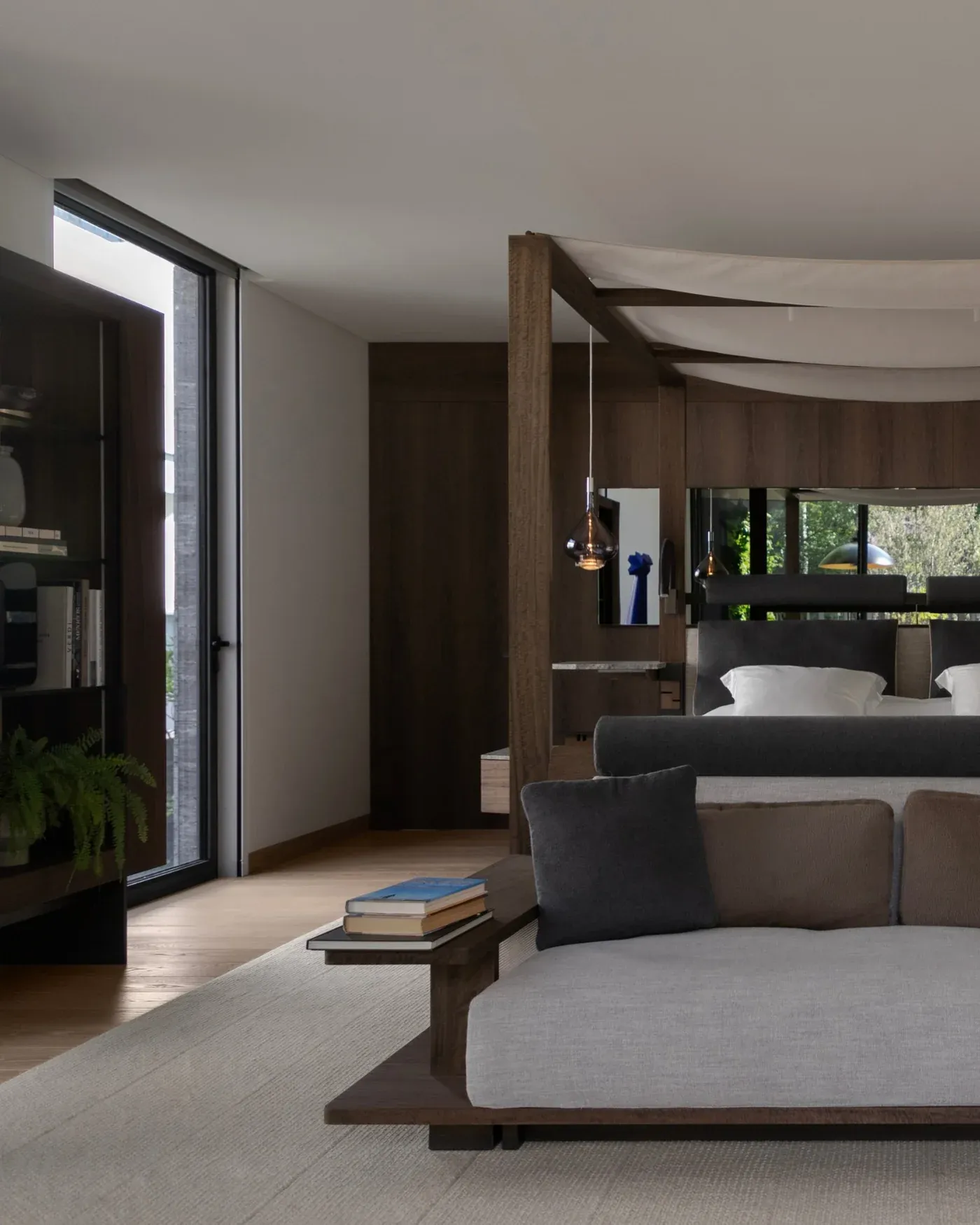
Australia's build-to-rent sector has grown to over 51,000 apartments in the pipeline as of early 2026, with a sector value now above $40 billion. The operators building and managing these assets, Mirvac, Lendlease, Greystar, and a growing number of international institutional investors, are not buying budget furniture. They're furnishing premium rental buildings with amenity spaces, lobbies, rooftop terraces, and common areas that need to perform aesthetically and durably for long hold periods. The contract value per building at that level is meaningful, and the operator's relationship with their furniture partner spans the full asset lifecycle.
The question worth asking directly: has Living Edge ever pitched the institutional BTR operators at the project level, rather than waiting for their A&D teams to come through the normal channel?
If the concern is brand dilution, putting the Living Edge name into a volume commercial context, a separate commercial interiors division, drawing on Living Edge's supplier relationships and 25-year database but operating under a distinct name, is the answer. The downstream commercial opportunity would be additive without being visible to the residential HNW client.
BTR and Relive also connect naturally. An operator who furnishes a building through this division is a future Relive client when they refresh at the seven-year mark. The relationship spans the full asset lifecycle, not just the initial fit-out.
Private members clubs
02 · Members Clubs
Furnish the space. Sell to the people in it.
Soho Home, the furniture and homeware brand that sits alongside Soho House's network of private members clubs, was built on a simple observation: members wanted to recreate the feeling of the clubs in their own homes. The sequence was: furnish a considered, beautiful space; let the right people experience those objects in a curated environment; when they want that feeling at home, they know exactly where to go.
Living Edge's showrooms already do a version of this. The CEO named showroom experience as the second-greatest source of value for customers, behind only relationships. The question is whether that principle extends into spaces Living Edge doesn't own but does furnish.
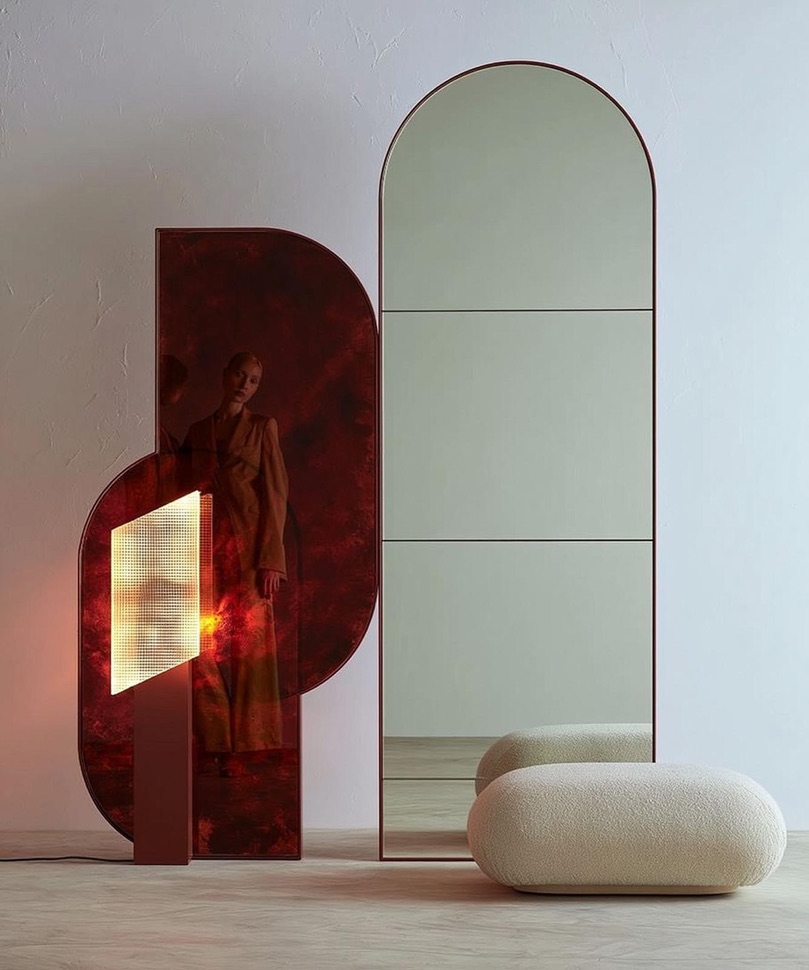
Australia's private members club market is growing. New hospitality concepts in Sydney and Melbourne, drawing from the same creative and professional communities that make up Living Edge's most valuable residential clients, are opening with premium interiors and an audience that lives exactly at the intersection of commercial and HNW residential. Becoming the furniture partner for two or three of those spaces is not a large commercial undertaking. But the downstream effect, every member sitting in a Living Edge chair, in an environment curated to the same standard as the brand itself, is a showroom that runs 365 days a year without Living Edge paying the rent.
Are there existing relationships with hospitality operators or club developers in the network that make this a conversation rather than a cold approach?
Relive & the circular model

03 · Relive
A 25-year client database. Premium product that holds its value. A market that now demands reuse.
The buy-back, refurbish, and resell programme you've described is one of the most structurally sound ideas in this entire document. You have the assets: a deep client database, product that retains form and value, and a commercial market where sustainability standards now practically mandate furniture reuse in new projects. Australian commercial fit-outs generate enormous furniture waste, and institutional clients with ESG commitments are actively looking for a credible circular option. Relive is that option, and no direct competitor is currently offering it at this level.
The platform question for Relive is whether to build the operational infrastructure from scratch, the logistics, the condition assessment process, the reconditioning workflow, or to acquire a small existing operator who already has that infrastructure. An acqui-hire gives the operations without a multi-year build. The brand and the client base Living Edge already has.
On the platform itself, Relive needs its own section, a properly designed browsing and enquiry experience that treats circular pieces with the same editorial consideration as new arrivals. Not a clearance section. A curation.
Collectible design
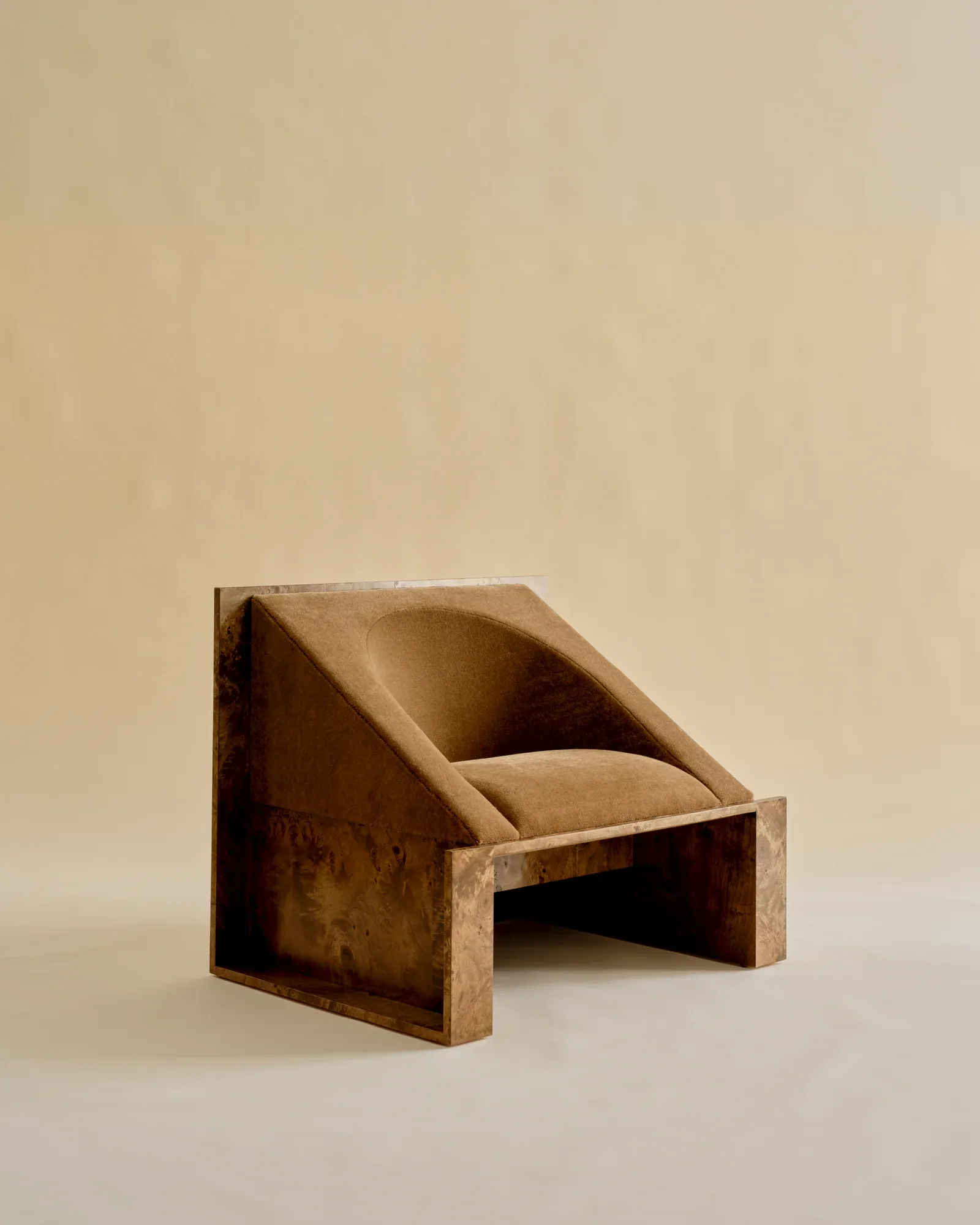
04 · Collectible
The HNW client who wants what others don't have
You've identified the HNW and UHNW market as an untapped opportunity, clients for whom the motivation is not ownership of quality, but ownership of rarity. You've also noted that Living Edge is already looking at expanding into higher-tier editorial pieces. That direction is right and the timing is good.
Building this from scratch means cultivating new brand relationships and collector-client trust over years. Acquiring a small specialist dealer or gallery, one with the right relationships and an existing collector clientele, particularly in vintage or limited-edition pieces from brands Living Edge already carries, compresses that timeline considerably and brings a client book that would otherwise take a decade to build.
On the platform, the collectible section needs editorial treatment that is visually distinct from the main catalogue. These are not products listed for sale. They are objects presented for consideration.
Acquisition: a question worth raising
Does Living Edge have a view on acquisition as a growth tool? It hasn't come up directly, and we don't want to assume, but given the ceiling question and the opportunity set above, it seems worth asking. The categories that make strategic sense are not about buying a competitor or consolidating market share. They're about buying capabilities or client books that would take years to build organically.
If Living Edge were to make one acquisition in the next 18 months, what would create the most immediate strategic value: a new capability, a new client book, or a new market?
The Big Idea
Built for the sale.
Not the browse.
Every other furniture site is built for browsing. This one is built for the work that actually drives Living Edge's revenue: the sales team, architects, designers, and consultants customising a solution for one client, then turning it into a polished, client-ready proposal in minutes rather than days. A sales enablement and specification system, presented as a luxury digital experience.
One workflow, five moves
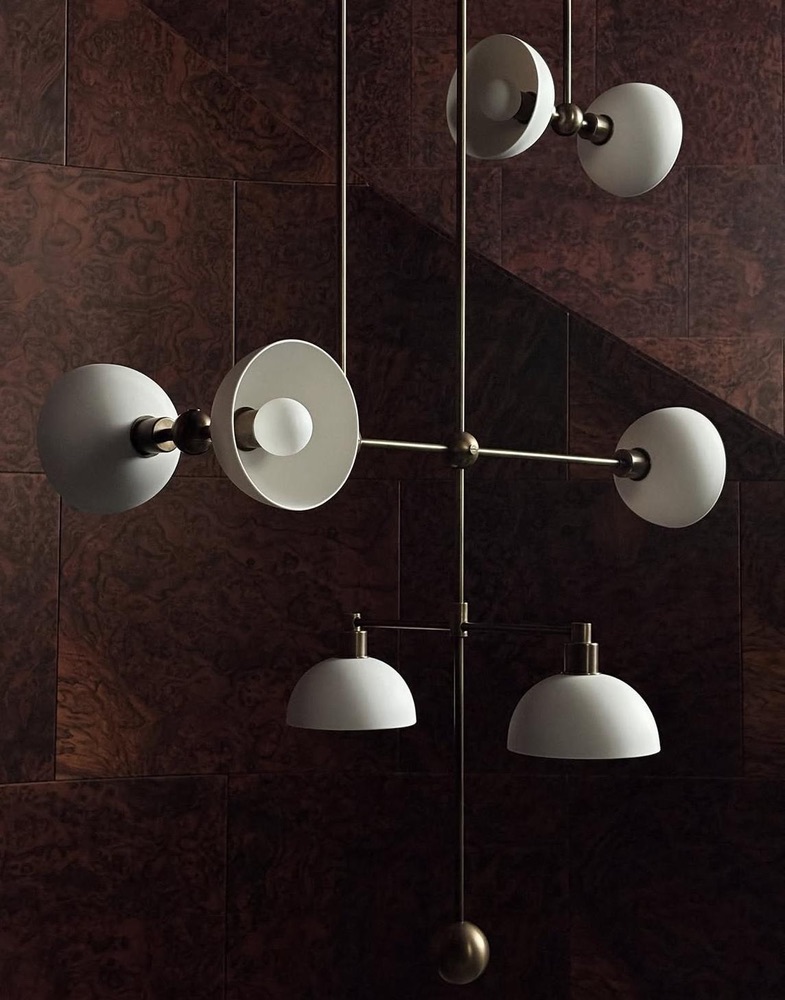
What every proposal carries
The presentation a consultant builds by hand today, scattered across decks, spreadsheets, and email, is assembled in one place and kept live as the project changes.
The dynamite layer
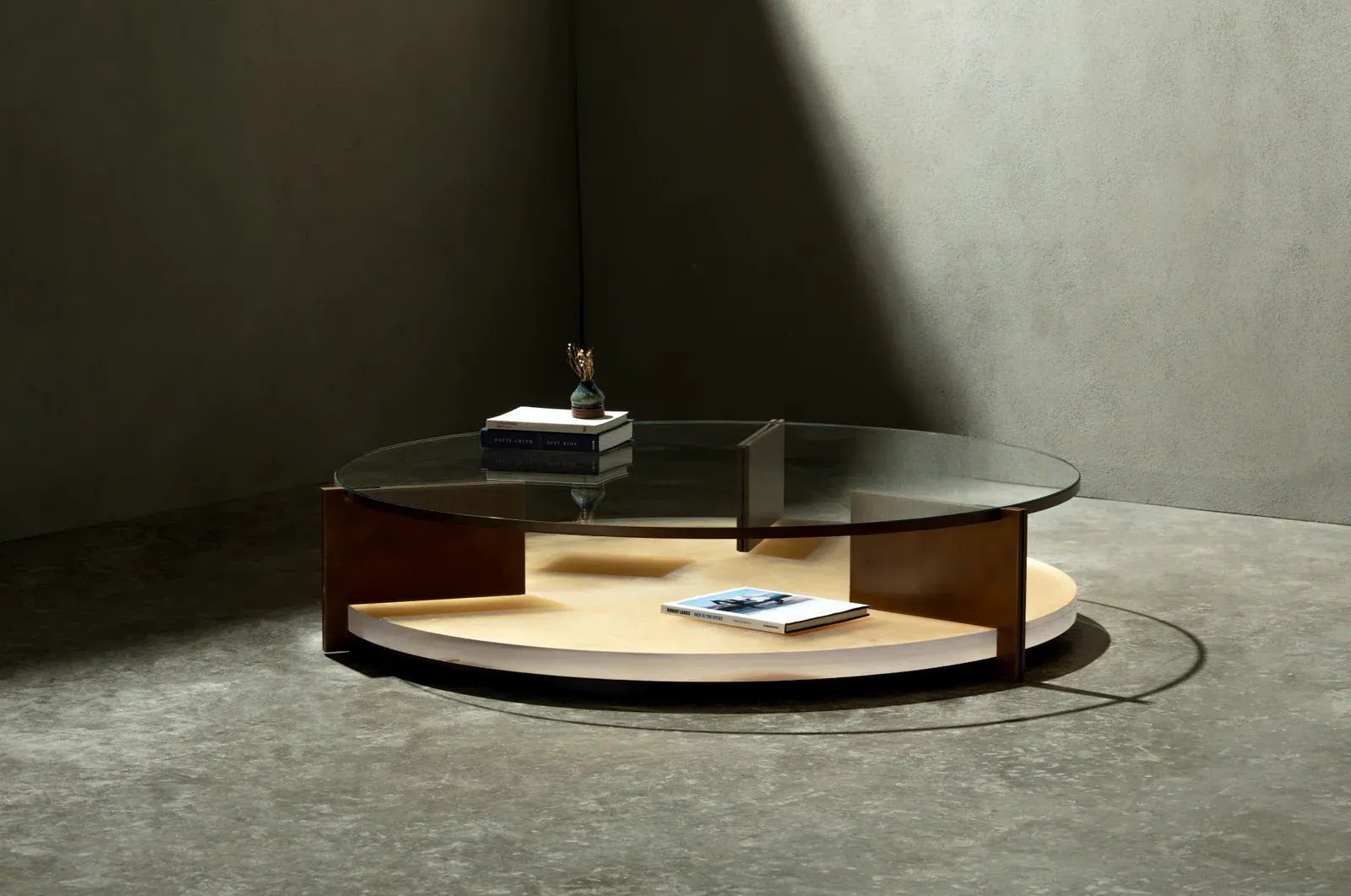
The leap
Product selection becomes spatial storytelling
Sales enablement and automated specification would, on their own, be industry-breaking. The renders are the dynamite. Using the selected products and the project brief, the platform generates architectural visualisations that place those products in context, informed by project type, sector, design language, materials, budget, and occupancy.
The client does not see a chair, a sofa, a desk, or a lighting piece. They see a completed workplace, a hotel lobby, a private residence, a build-to-rent amenity space, a hospitality venue, an executive suite. Product selection becomes the experience of standing inside the finished room.
The visualisation engine depends on the same standardised product data and 3D asset library set out under Emerging Capabilities, which is why the foundations come first. The ambition shapes how those foundations are built.
A new category of platform
This is not a better website. It is a new category, sitting between e-commerce, CRM, specification software, sales enablement, AI visualisation, architectural rendering, proposal automation, and luxury brand experience. The shift is from selling furniture to selling complete design intelligence.
The future of luxury furniture commerce
Most furniture companies help customers browse products. Living Edge can help clients imagine, specify, visualise, approve, and buy complete environments.
That is the future of luxury furniture commerce.
AI Visualisation
The Architectural Visualisation Layer
The render engine is the part of the platform that turns a specification into a space. It takes the products a consultant has selected and the brief behind the project, and produces architectural visualisations that show those exact products in context. This is the capability that moves Living Edge from presenting products to presenting environments.
Products, or worlds
From brief to environment
What the system reads
The project, not just the products.
- Project type and industry sector
- Design language and brand context
- Materials and finishes selected
- Budget and quantity
- Occupancy and density
- Functional requirements
What it generates
A finished space, furnished with the proposal.
- Reception and arrival concepts
- Open workspaces
- Meeting and boardrooms
- Collaboration zones
- Executive suites
- Breakout and amenity areas
The renders themselves
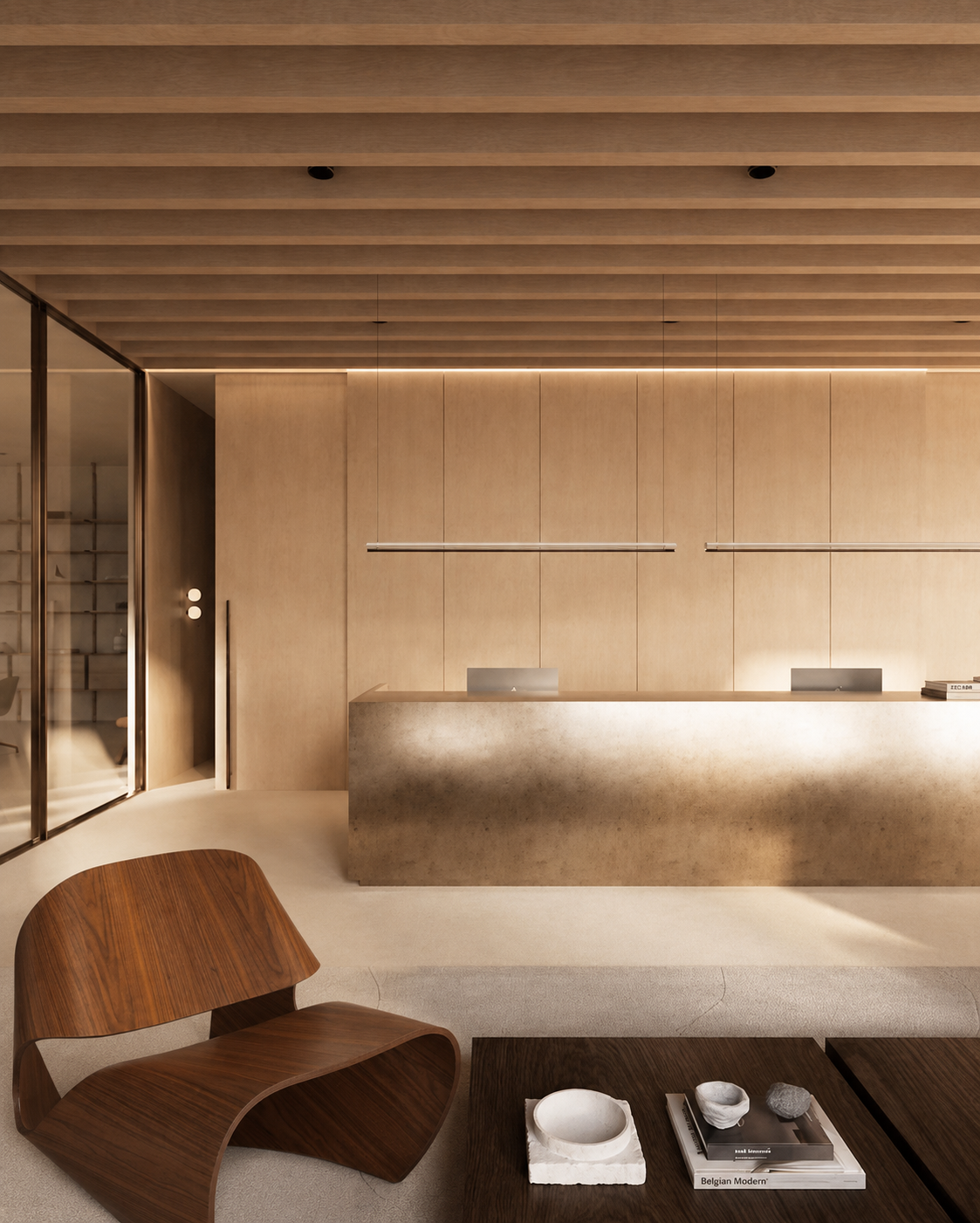
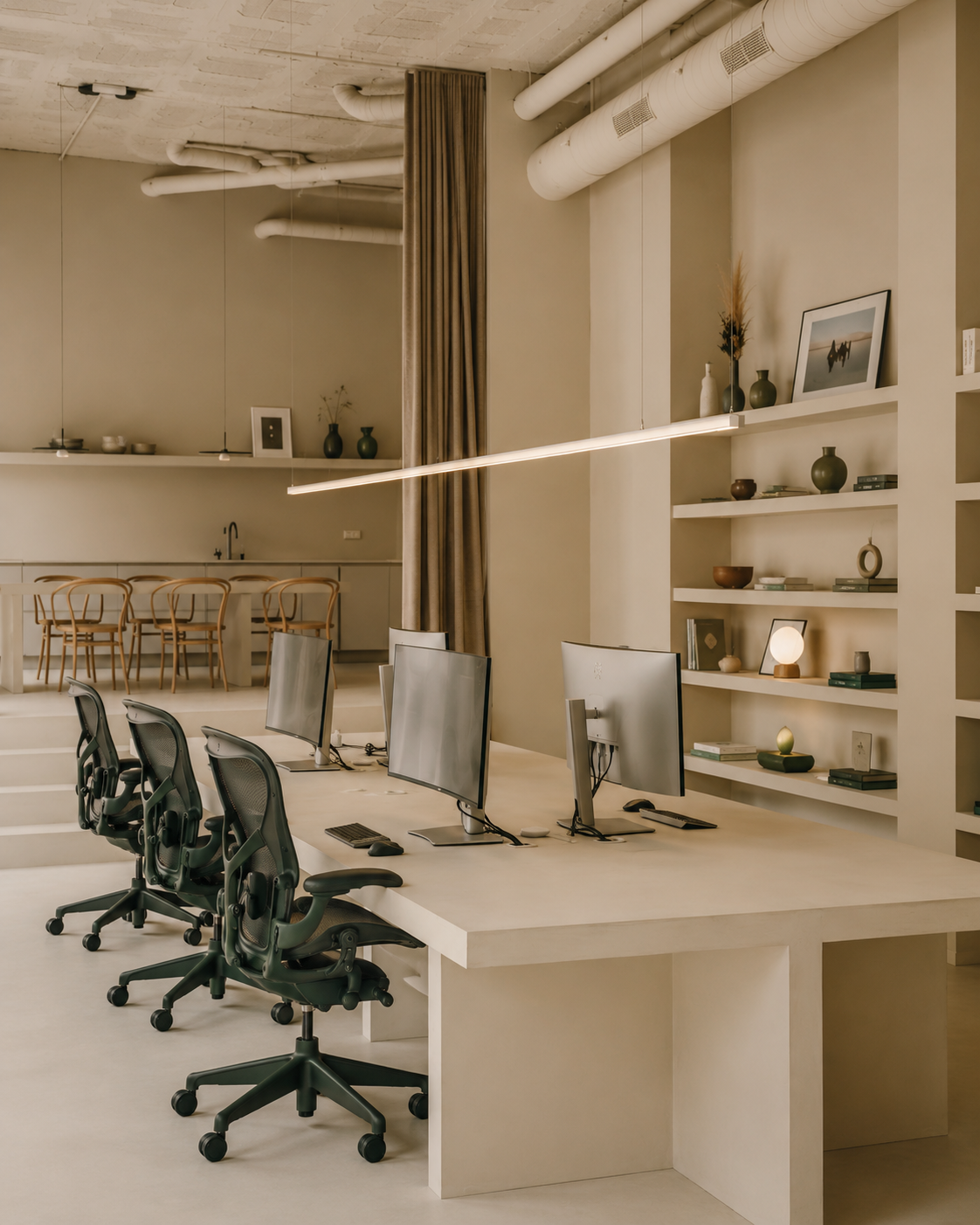
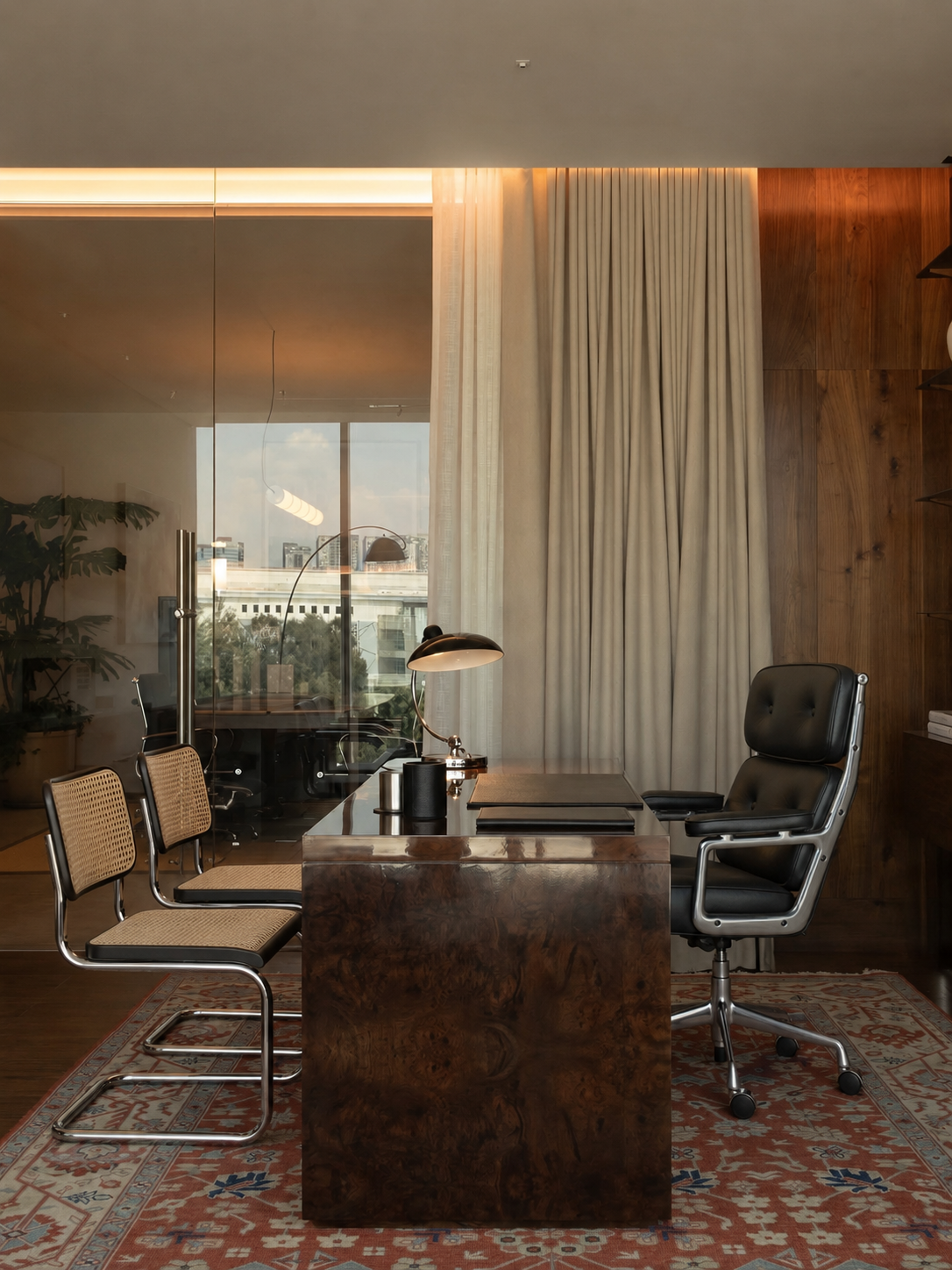
Generated renders are built from the actual products in each proposal.
Living Edge Worlds
Every collection launch becomes an environment, not a set of product shots. Each world is rendered in a Living Edge design language and furnished with the actual range.
Workplace
The complete workplace
Residential
A home, not a white background
Hospitality
Possibility, not inventory
Why it changes the conversation
01 · Decision
Decisions made in the room
02 · Alignment
Fewer revision cycles
03 · Scale
Bigger projects, sooner
04 · Advantage
A reason to start here
What it depends on
The cascade
Every selection becomes a moodboard. Every moodboard becomes a render. Every render becomes a presentation. Every presentation becomes a sales conversation.
The result is not a better website. It is a new category.
Design Intelligence as a Service.
Design Vision
The New Living Edge
The next evolution of Living Edge is not a redesign. It is a repositioning.
As the business expands beyond products into experiences, knowledge, community, and services, the platform must reflect a more advanced role in customers' lives. Every visual, editorial, and UX decision should reinforce authority, build trust, and increase engagement.
The goal is not a better website. The goal is a more valuable Living Edge.
The benchmark
Does luxury furniture sell online at this price point?
Evidence
It does, when the experience justifies the price
RH, the American luxury home furnishings brand, sells sofas, dining tables, and bedroom furniture at prices that rival Living Edge's catalogue, entirely through an editorial-led digital and showroom experience. Their product pages are built around narrative, material storytelling, and contextual photography. Average session duration on their site is 12 minutes, against 4 minutes for a typical furniture retailer. Their repeat purchase rate sits at 68% within 24 months of a first transaction, with average customer lifetime value exceeding $12,000. Their membership programme, which offers design consultations and exclusive pricing, now contributes to 97% of the company's revenue.
The membership model matters because it converts a transactional customer into a relationship. That relationship is then maintained through the site, editorial content, and the showroom, all three working together rather than in competition. This is structurally very similar to what Living Edge already does well in commercial. The opportunity is to replicate it digitally for residential.
The question is not whether customers will buy online at this price point. They will, when the experience earns it. The question is whether the current site does enough to justify the decision, and the honest answer is that it doesn't, not yet.
The overarching principle
Navigation & dual-audience architecture
01 · Navigation
Two front doors. One brand.
The navigation needs to serve two completely different mental models simultaneously. A residential customer thinks in objects: chairs, lamps, tables. An architect specifying a project thinks in spaces and functions: workplace seating, hospitality dining, outdoor commercial. The platform offers both entry points without either feeling like a second-class route.
- Consumer path: browse by product category: seating, tables, lighting, storage, outdoor
- Specifier path: browse by room, function, commercial context, material, lead time
- On desktop: a persistent context toggle that shifts the entire navigation
- On mobile: a clean mode-first entry screen
This is not two different sites. It is two different lenses on the same catalogue, surfaced through smart tagging built during the product data phase.
Trade tools: owning the specifier's workflow
02 · Image Library
On-demand assets for every product
03 · Moodboard Builder
Build, save, and share project boards from the site
04 · Project Folders
Multiple active projects. One account.
05 · Spec Sheet Generator
One-click specification documents
Editorial layer

06 · Editorial
A design publication that also happens to sell
The content that already performs best for Living Edge, in your own ranking from discovery, is projects first, designer stories second, workplace insights third. That's the editorial brief. The platform should be built around producing and presenting that content properly, not treating it as a blog afterthought.
Each campaign page is a self-contained visual essay: full-bleed photography, considered typography, narrative copy, and products embedded naturally within the story. The marketing team can build and publish these without developer involvement. A purpose-built editorial CMS block system underpins the whole thing.
- Seasonal campaign pages, tied to product launches and brand moments
- Project showcases, real interiors where Living Edge products live
- Designer profiles, the people behind the objects, told properly
- Brand stories: why Vitra matters, who Eames was, what Muuto stands for
New arrivals & product presentation
07 · Arrivals
New releases presented as events, not updates
08 · PDP
Imagery and specification that justify the price
Photography strategy
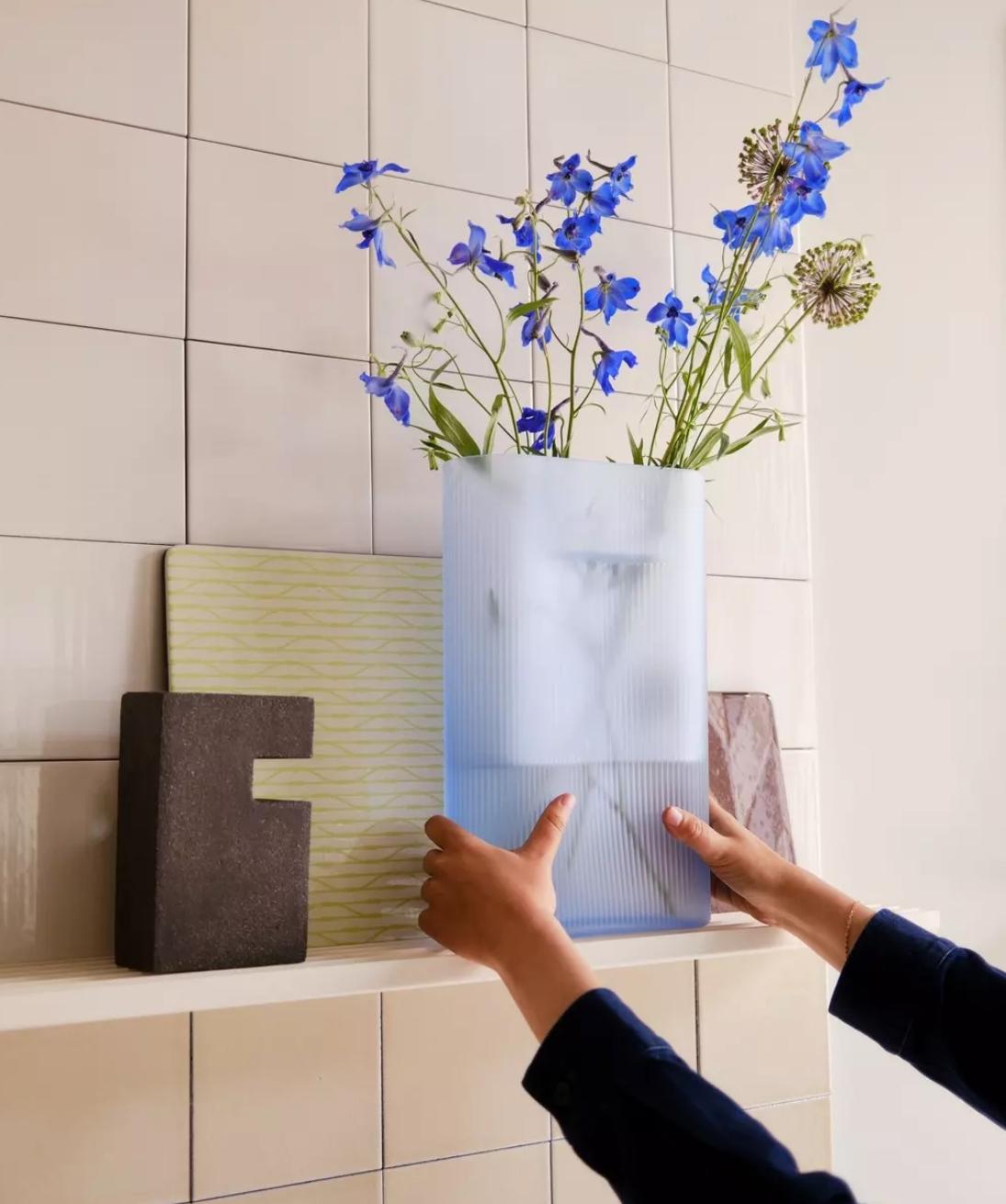
09 · Image
A coherent visual language the platform can own
Third-party supplier images are unavoidable for product shots, but they cannot be the full picture. The new platform requires two distinct image layers:
- Supplier imagery, managed and standardised: A clear specification for how supplier images are accepted, cropped, colour-corrected, and presented. Products on white and products in context should never sit side by side in the same grid.
- Owned editorial photography: A programme of commissioned photography, lifestyle, spatial context, campaign imagery, that provides the site with images no supplier can supply. A modest initial shoot budget, briefed in parallel with this engagement, would transform the homepage, campaign pages, and brand pages immediately. This is not optional.
The design system includes a photography brief document, aspect ratios, colour temperature, subject framing, mood direction, so that any photographer working with Living Edge produces images that fit the platform rather than fight it.
Typography & visual identity
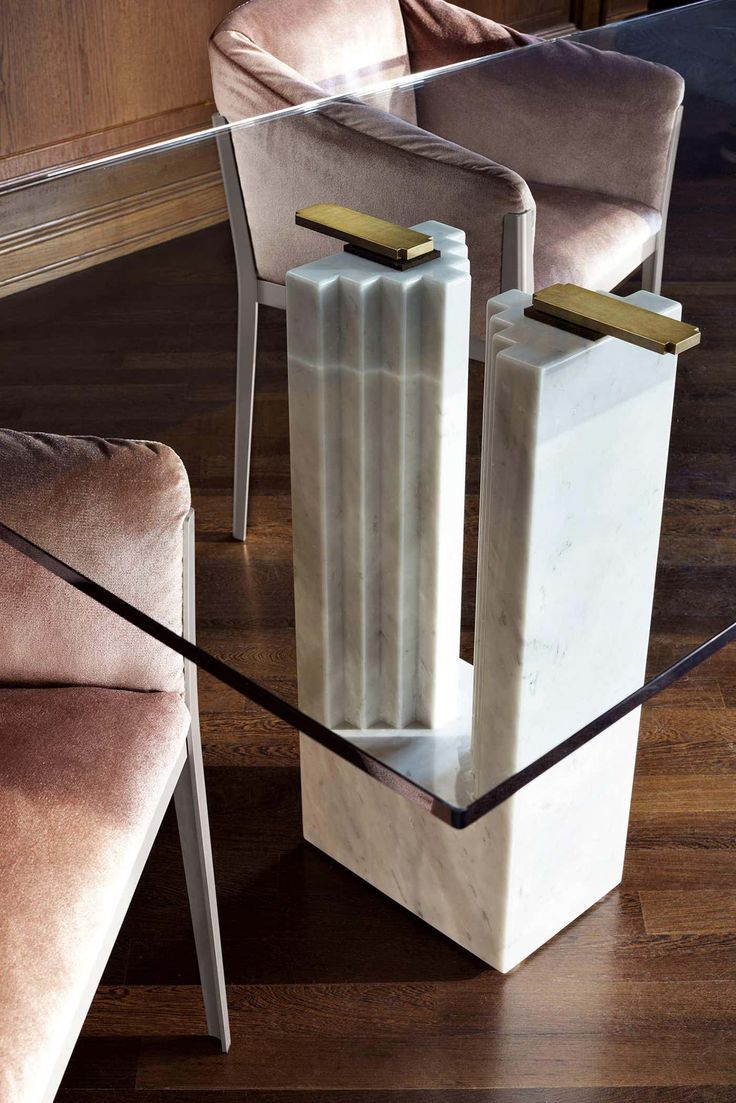
10 · Type & Identity
Typography as the primary carrier of brand authority
The new platform will be built around a distinctive, considered type system, not a generic pairing pulled from a shortlist. Type should communicate refinement before a single product is encountered. It should feel like it could only be Living Edge.
Three roles with clear hierarchy and purpose:
- Display: A high-contrast serif used at large scale for headlines, campaign titles, and hero moments, architectural, unhurried, with presence. Used with restraint so that each appearance carries weight.
- Body: A refined humanist sans-serif for all running text, readable, warm, never cold or mechanical. Generous leading, careful sizing.
- Utility: A geometric or grotesque cut for labels, navigation, data, and interface elements, precise and functional.
No template will be designed before the type system is signed off. The type system is the brand system.
AI & Emerging Tools
What the Platform Makes Possible
These are not Phase 1 deliverables. They are the layer that becomes available, and genuinely powerful, once the platform foundations are in place. We're presenting them here because they shape how the foundations should be built, and because they represent areas where Studio Akarii can continue to help as the platform matures.
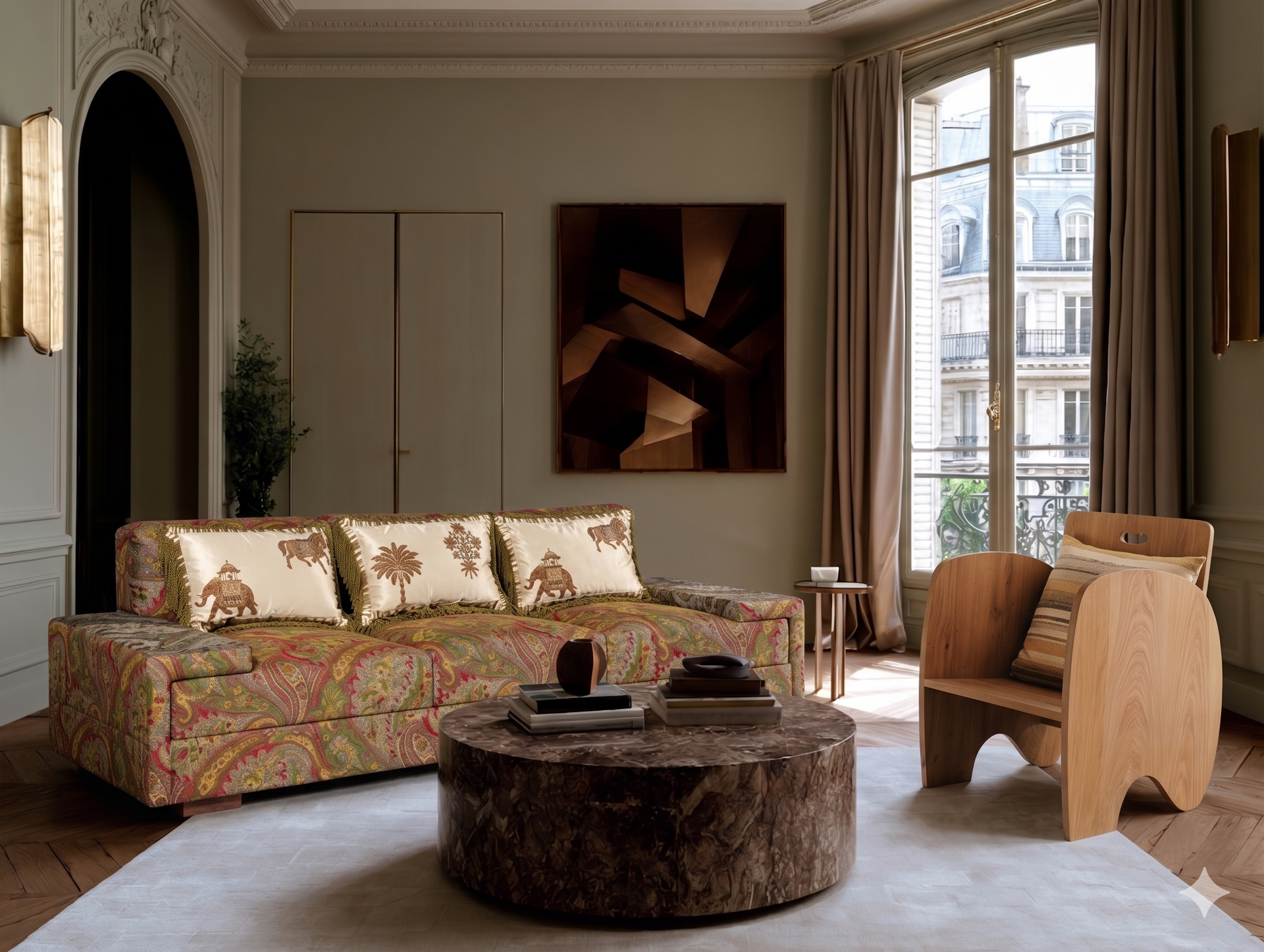
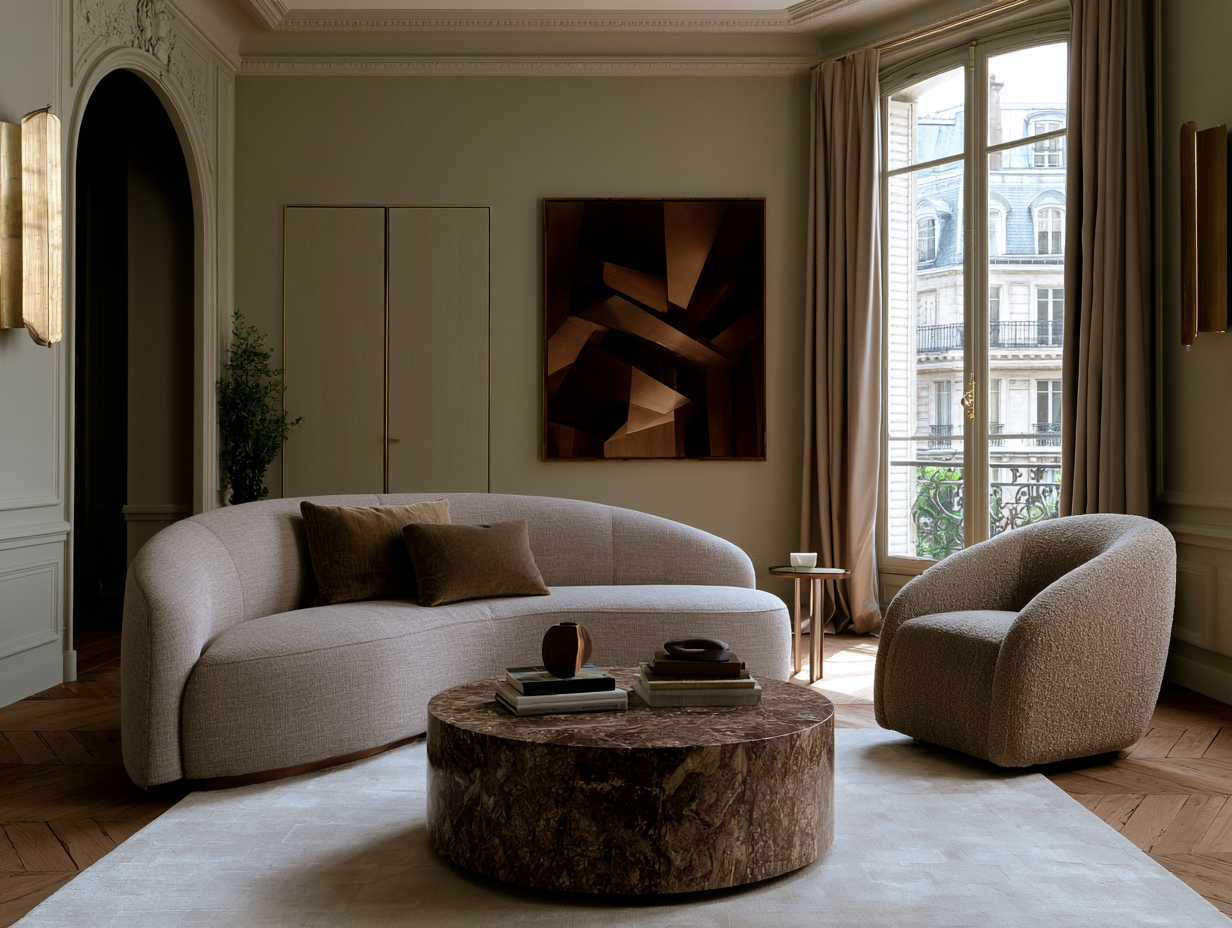
Before & after · AI Concept Visualisation
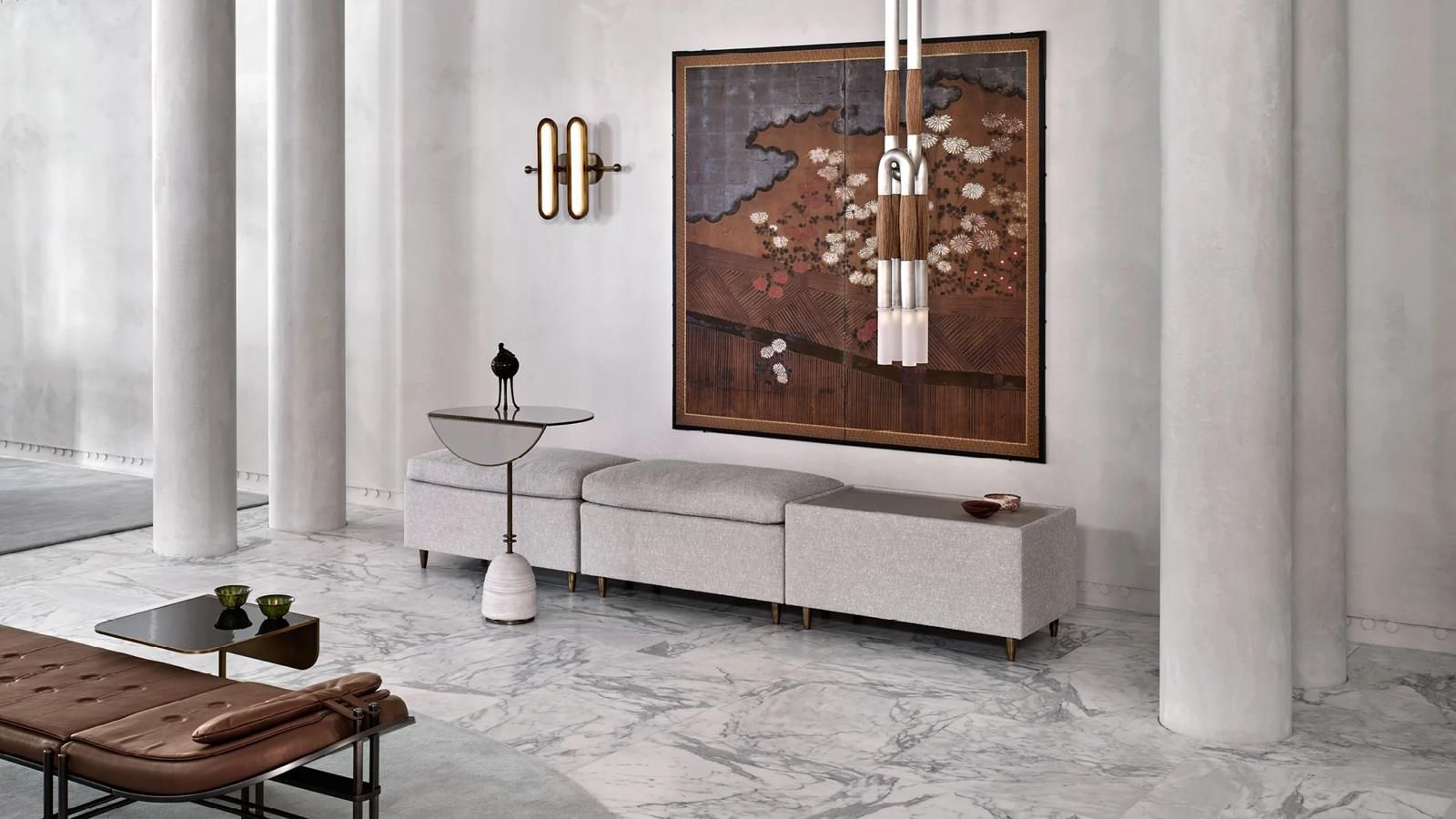

The dependency that underpins all of this
Why foundations come first
Clean, well-tagged product data
Design system & brand language
Trade portal & specifier tools
AI that compounds on real foundations
The CEO described AI as "our single biggest opportunity to rise above the competition." That's right, but AI deployed before the data and content foundations exist produces novelty, not value. The product tagging done during migration is what makes AI curation possible. The design system is what makes a salesperson's AI-generated presentation look like it belongs to the brand. Getting the platform right is the AI investment.
Ready to build, once the platform is in place

01 · Sales Presentation Generator
A client-ready edit in minutes, not hours
An account manager has a client meeting tomorrow: a 40-person workplace fit-out, warm materiality, 8–12 week lead time. Instead of two hours pulling images into a deck, they open a tool, input a brief, and receive a branded, curated product selection formatted as a shareable URL or exportable PDF. Living Edge design language throughout. Product imagery, pricing, lead times, and a short editorial frame, all generated from the product catalogue.
This is not speculative. It requires a well-tagged catalogue and the design system, both Phase 1 deliverables. The AI layer on top is curation and assembly logic, not generative AI. The CEO ranked bespoke sales team tools as a priority. This is the practical version of that ambition.
02 · AI-Assisted Moodboard
From brief to starting point in seconds
A trade user describes a project in natural language: "boutique hotel lobby, warm and tactile, contract-rated, 40–60 week lead time acceptable." The system returns a suggested product selection as a starting moodboard. The designer refines from there. This is distinct from the manual moodboard builder already in scope. That is a curation tool. This is an AI-assisted starting point that removes the blank-canvas problem.
The downstream effect: specifiers get further before they need to call the sales team. The sales team's first conversation is more qualified. The CEO ranked AI moodboard assistance as the second-highest customer-facing AI priority in discovery.
Worth exploring: medium-term
03 · Specification Intelligence
Every team member answers like the most experienced one
An AI layer over Living Edge's product and project knowledge base, so that any member of the team can answer a complex specification question with authority. Which products are rated for outdoor commercial use at this price band? What's available within eight weeks for a hospitality dining context across these three brands? This removes a consistent bottleneck in the sales process and raises the floor of the team's product knowledge without requiring years of experience to get there.
Internal-facing. High practical value. Requires structured product data and a documented knowledge base, both outputs of Phase 1.
04 · Personalised Client Editorial
A bespoke story for every client, at scale
An account manager generates a curated editorial piece for a specific client: products presented in context, a project narrative, a shareable digital link. The content comes from the editorial CMS already in scope; the personalisation is the AI layer that assembles and tailors it to the client's brief, budget, and aesthetic preferences. The output looks like it was made specifically for them, because at the relevant layer, it was.
This is the tool the CEO described when he ranked personalised brochures for salespeople as a discovery priority. It also quietly addresses one of the most common requests the sales team fields, "can you put together something I can show my client?", without taking the team's time to do it.
The horizon: exploratory
These are further out. The technology is moving quickly and both are worth watching closely. Neither should be rushed. Their value depends entirely on the quality of the product data and 3D asset library that underpins them.
05 · Concept Visualisation
Products in context, without a photo shoot
AI-generated lifestyle imagery for products that lack owned photography, rendered in plausible, contextually appropriate settings. Not a replacement for the photography programme, but a way to close the gap for the long tail of the catalogue that will never have bespoke imagery. The output quality from these tools is improving rapidly. The dependency is standardised product images and ideally 3D models for the hero catalogue.
Worth designing for in the product data structure now, even if the feature itself is 12–18 months away.
06 · AR Product Placement
See it in your space before you commit
A residential client places a Vitra chair or a HAY sofa in their living room through their phone before committing to purchase. The friction this removes, particularly for high-value residential decisions made without a showroom visit, directly addresses the biggest barrier to online conversion at this price point. The CEO ranked AR in the top three customer-facing AI priorities in discovery.
The dependency is a high-quality, standardised 3D model library, a supplier coordination task as much as a technology one. Starting that conversation with key brand partners now positions Living Edge to move quickly when the platform is ready.
How Studio Akarii can help
Studio Akarii's Recommendation
Our Scope
What follows is our recommendation, not a menu for Living Edge to assemble, but a considered view of what creates the most value and why. Our expertise is strategy and design. That is what we are proposing.
Why strategy and design first
The next Living Edge platform is an opportunity to align strategy, experience, and technology around a shared vision for the future of the business.
Before committing to a technical build, there needs to be clarity around who the platform serves, what role it plays, and how it should look, feel, and behave.
This engagement creates that foundation.
By defining the strategic direction and customer experience upfront, Living Edge can move into design and development with confidence, ensuring every investment contributes to a platform that supports both current needs and future ambitions.
What Studio Akarii delivers
01 · Discovery & Strategy
The foundation everything else rests on
Stakeholder sessions, audience mapping, a full review of the current site's commercial role, and a strategic brief that defines what the platform needs to do and for whom. This phase answers the questions raised throughout this document: audience hierarchy, new business adjacencies, and the site's role in the growth strategy. Client sign-off required before Phase 02 begins.
02 · UX & Information Architecture
Structure before surface
Wireframes for all core templates. The dual-mode navigation. The trade tools architecture, moodboard builder, project folders, asset library, spec sheet generator, designed as a system, not as individual features. An interactive Figma prototype for the primary consumer and trade journeys, validated before a line of visual design is drawn.
03 · Creative Direction & Design System
The visual language of the brand, built properly
The full design system, type, colour, spacing, motion principles, component library, built to the luxury fashion benchmark. Typography chosen for Living Edge specifically. A photography brief and direction document. Design tokens documented and structured for developer handoff. No template is designed before the type system is signed off.
04 · All Page Templates
Desktop and mobile, in parallel
Homepage, product detail page, category page, brand page, editorial campaign template, trade portal, new arrivals, Relive section, and the collectible design section. Two revision rounds per template. Mobile is designed in parallel throughout, not adapted from desktop after the fact.
05 · Editorial CMS Design
So the marketing team doesn't need a developer
A flexible block-based editorial system, approximately 8–10 content block types, designed so the marketing team can build campaign pages, brand stories, and editorial features without development involvement. Designed in Figma with full content model documentation.
06 · Handoff Package
Everything a development partner needs
Complete Figma files with developer annotations, component specifications, CMS content model documentation, and a technology stack recommendation. We can recommend development partners appropriate to the chosen stack. One structured handoff session is included.
What this scope does not include
| Item | Notes |
|---|---|
| Frontend development & build | A development partner, chosen by Living Edge or recommended by us, takes the design system and builds from it. This separation protects both the quality of the design and the flexibility of the technical decisions. |
| Product data migration | Migration from Salesforce Commerce Cloud is a technical workstream best owned by Living Edge's team or a specialist data partner. The design system will include a full data model and metafield specification to make the migration precise. |
| Photography & video production | A photography brief is included. Production is a separate budget, highly recommended to begin in parallel with this engagement, not after launch. |
| Copywriting | A tone of voice brief is included in the design system handoff. A copywriter can be briefed separately; we can recommend one. |
| Third-party integrations | ERP, PIM, email platform, analytics setup, scoped separately once the technology stack is confirmed. |
Recommended technology stack
How We Begin
Strategic Delivery Partnership
Supporting today’s priorities while building tomorrow’s platform.
As Living Edge enters its next phase of digital investment, we believe the greatest opportunity isn’t simply delivering a successful Shopify migration. It is ensuring every decision made today creates long-term commercial value.
Rather than introducing another supplier, Studio Akarii becomes a strategic partner to Living Edge—bringing digital experience, technology, AI and innovation together into one connected roadmap, and coordinating specialist implementation partners where required.
This allows leadership to move forward with confidence, knowing every investment contributes to a broader digital vision.

What the partnership covers
01 · Platform
Digital Platform Leadership
Strategic oversight throughout the Shopify programme, ensuring customer experience, information architecture and commercial priorities remain aligned with the Living Edge brand.
Includes
- Platform strategy
- UX & customer journey refinement
- Navigation & information architecture
- Creative direction
- Feature prioritisation
- Leadership reviews
- Technical delivery oversight
02 · Visualisation
Digital Visualisation Strategy
A long-term roadmap for product visualisation, AI-generated imagery and future digital experiences.
Rather than selecting technology first, we define the strategy that informs future investment.
Includes
- Visualisation audit
- Cylindo review
- AI imagery opportunities
- Digital asset ecosystem
- Executive recommendations
- Future roadmap
03 · AI
AI Transformation
Helping leadership identify practical opportunities for AI across sales, marketing, operations and customer experience.
The objective is to build capability, improve efficiency and establish Living Edge as a digital leader within the industry.
Includes
- Executive workshop
- Opportunity mapping
- AI implementation roadmap
- Department recommendations
- AI Champion framework
One strategic partner
Rather than engaging multiple consultants across different disciplines, Studio Akarii provides one senior strategic layer connecting business objectives, customer experience, digital platforms and future innovation.
Where specialist implementation is required, we work alongside trusted delivery partners, ensuring strategy and execution remain aligned throughout the programme.
Initial engagement
Strategic Delivery Partnership
Initial Engagement
Included
- Weekly executive strategy session
- Digital platform leadership
- Creative direction
- Digital experience oversight
- Visualisation strategy
- AI transformation roadmap
- Technology reviews
- Leadership decision support
- Priority roadmap
- Executive recommendations
- Implementation coordination
Continuing partnership
Continuing Strategic Partnership
Following the initial engagement, Studio Akarii can continue supporting Living Edge as its long-term strategic digital partner.
Includes
- Executive strategy sessions
- Digital roadmap
- AI implementation guidance
- Platform evolution
- Visualisation strategy
- Quarterly planning
- Priority advisory support
This engagement is intentionally designed to establish a long-term strategic partnership rather than a one-off project. By embedding Studio Akarii within the leadership team during this critical phase, Living Edge gains ongoing access to senior strategic thinking across digital, AI and customer experience—ensuring every future investment is connected to one clear commercial vision.
Project Timeline
Timescales
Strategy and design across 4 to 5 months. Timeline assumes structured client feedback at each phase gate and no major scope changes after sign-off.
Phase by phase
What keeps this on time